


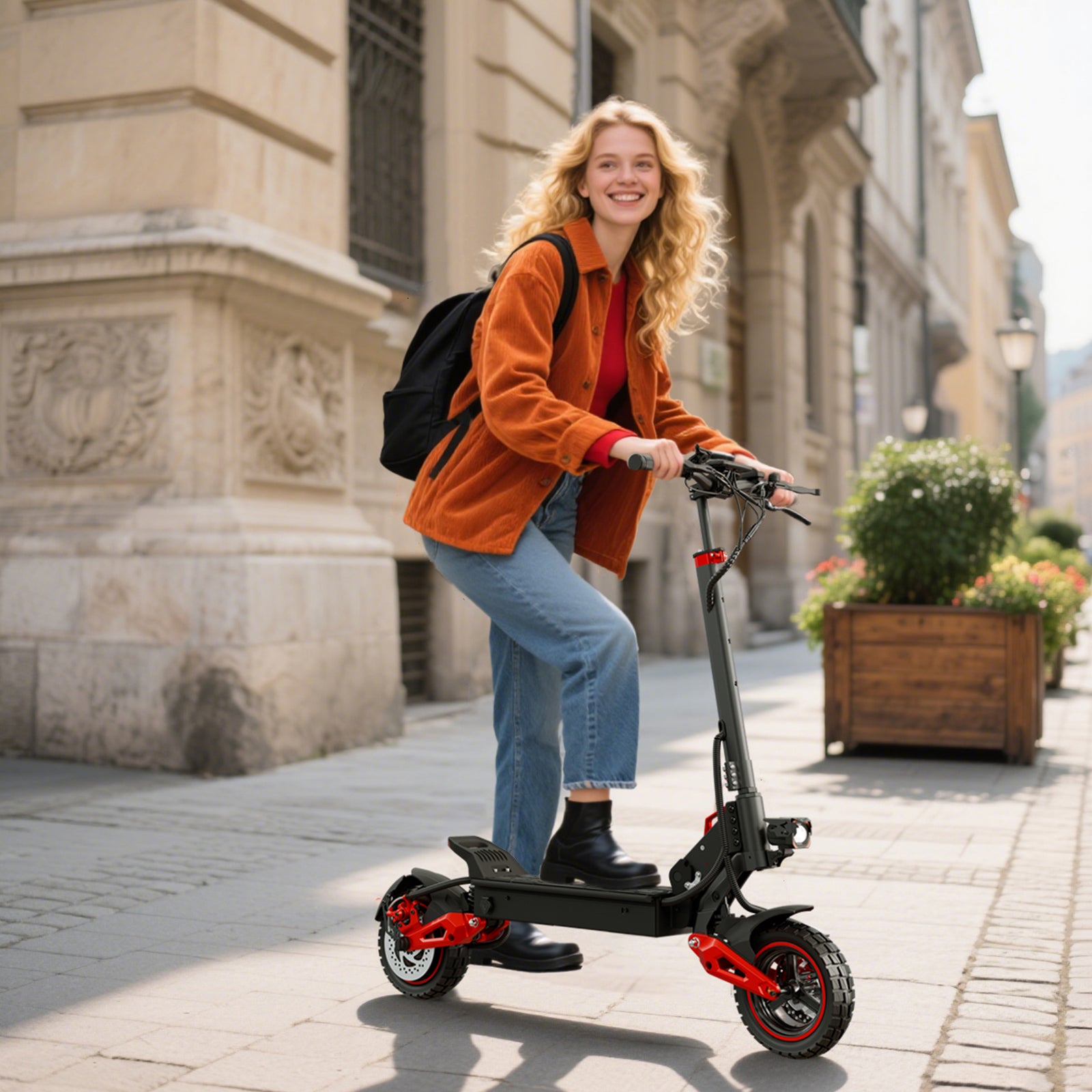
Most electric scooters look similar at first glance.
A deck, handlebars, a motor, a battery — the basics rarely change. But the moment you start riding, one feature quietly defines how the scooter feels beneath you: suspension.
You don’t always notice suspension when it’s working well.
You notice it when it isn’t.
Every small bump, curb transition, or uneven road surface travels upward through the frame. Without a proper suspension system, that vibration goes straight into your hands, arms, knees, and lower back. Over time, what starts as a mild discomfort becomes fatigue — or worse, a loss of control.
Suspension is not just about comfort. It is about how confidently, smoothly, and safely you ride.
What Is Suspension on an Electric Scooter?

Suspension is the system designed to absorb shocks and reduce vibration caused by uneven riding surfaces. Instead of letting every impact transfer directly to the rider and frame, suspension components compress, absorb energy, and then return to their original position.
On an electric scooter, suspension typically consists of springs, dampers, or elastomer-based systems mounted at the front, rear, or both. Each design manages energy differently, but the goal is the same:
keep the scooter stable while isolating the rider from sudden impacts.
Good suspension doesn’t eliminate road texture entirely. It filters it — smoothing sharp jolts while preserving enough feedback for precise control.
Why Suspension Matters More Than Riders Expect
Many riders underestimate suspension until they experience a scooter with a well-tuned system. The difference is immediate.
1. Improved Ride Comfort
Without suspension, the body absorbs repeated micro-impacts. Over longer rides, this leads to wrist strain, shoulder tension, and lower-body fatigue. Suspension reduces that load, allowing riders to stay relaxed and focused for longer periods.
2. Better Control and Stability
When a scooter encounters uneven surfaces, suspension helps keep the frame composed. This means the handlebars feel steadier, steering inputs are more predictable, and sudden surface changes are less likely to cause instability.
3. Increased Safety
A stable scooter reacts more consistently during braking and turning. Suspension helps prevent sudden jolts that can shift rider balance at critical moments — especially at moderate to higher speeds.
4. Reduced Stress on the Scooter Itself
Repeated impacts do not only affect the rider. Suspension also protects the scooter’s frame and components by reducing long-term vibration stress, helping maintain structural integrity over time.
Front, Rear, or Dual Suspension: What’s the Difference?
Front Suspension
Front suspension primarily absorbs impacts encountered by the front of the scooter, such as surface transitions or uneven pavement. It improves steering comfort and reduces vibration felt through the handlebars, helping riders maintain smoother control.
This setup is often found on entry-level or lightweight commuter scooters where simplicity and reduced weight are priorities.
Within the Freeboy lineup, the H14 is equipped with front suspension only. As a city-focused commuter scooter designed for short, practical trips, this configuration helps smooth out common urban surface changes while keeping the overall structure efficient and easy to manage. For everyday city riding and quick errands, front suspension provides noticeable comfort without unnecessary complexity.
Rear Suspension

Rear suspension supports the rider’s weight and absorbs energy transferred through the deck. It plays an important role in reducing fatigue during longer rides and helps the scooter remain composed when encountering repeated surface irregularities.
Scooters with rear suspension generally feel more forgiving under load, especially during extended use.
Dual Suspension (Front + Rear)

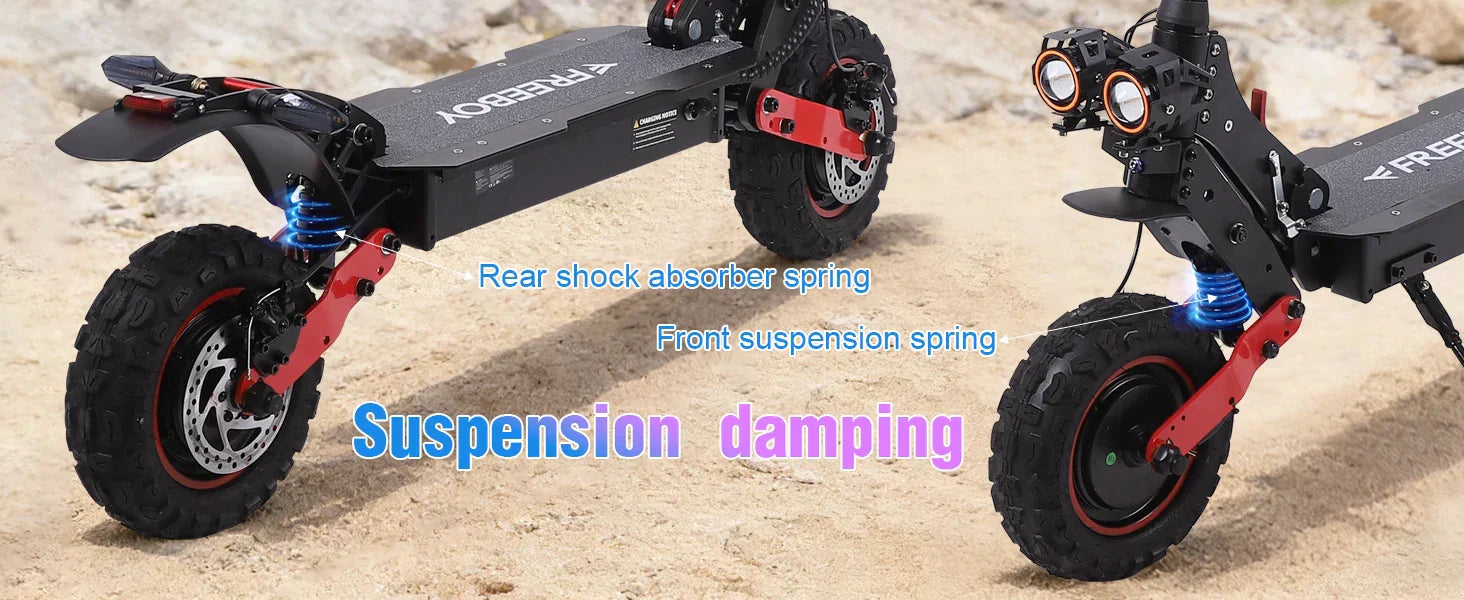
Dual suspension systems combine both front and rear shock absorption, delivering the most balanced and refined riding experience. By managing impacts at both contact points, vibration is reduced across the entire frame rather than concentrated in one area.
Most Freeboy electric scooters are equipped with dual suspension systems, including models such as J11, J01, J15, and H6. This design choice reflects a focus on ride stability, comfort, and control across a wide range of everyday riding conditions.
For riders who value smoothness, confidence, and consistency, dual suspension offers a noticeable upgrade in overall ride quality.
Common Types of Electric Scooter Suspension Systems
Spring-Based Suspension

Spring-based suspension systems are among the most widely used designs in electric scooters. They rely on mechanical springs to compress under impact and rebound smoothly, offering reliable shock absorption with a straightforward structure.
Most Freeboy scooters feature dual spring-based suspension, including models such as J11MAX, J11PLUS, J01, J15, and H6. This setup strikes a strong balance between comfort, durability, and low maintenance.
Spring-based suspension is valued for its consistent and predictable response to everyday surface changes, allowing the scooter to remain stable without feeling overly stiff or loose. Its simple mechanical structure contributes to long-term reliability and reduces the need for frequent servicing when compared with more complex systems. Because it delivers dependable comfort while remaining easy to maintain, spring suspension is particularly well suited for daily commuting and frequent riding, where consistency and durability matter more than advanced adjustability.
For riders seeking dependable comfort without added complexity, spring suspension remains a practical and proven solution.
Hydraulic or Oil-Damped Suspension

Hydraulic (oil-damped) suspension systems use fluid resistance to control compression and rebound. This allows the suspension to absorb impacts more progressively, resulting in smoother motion and improved stability, particularly at higher speeds.
Freeboy’s J30MAX and H9 models are equipped with dual hydraulic suspension systems, designed to deliver a more refined and controlled ride experience.
By managing suspension movement through fluid damping, hydraulic systems are able to handle larger impacts more smoothly while maintaining better control during continuous vibration. This results in reduced bouncing, improved composure, and greater stability when riding at higher speeds or over extended distances. Because of this refined behavior, hydraulic suspension is often favored by riders who prioritize performance, comfort, and a more premium riding feel.
Elastomer Suspension
Elastomer suspension systems use dense, rubber-like materials to absorb vibration. They are compact, quiet, and largely maintenance-free, making them suitable for riders who value simplicity.
While elastomer systems may not provide the same depth of absorption as spring or hydraulic designs, they are effective at filtering sharp, sudden impacts and reducing overall vibration in lightweight applications.
Who Benefits Most from Suspension?
Suspension is valuable for nearly all riders, but it becomes especially important if you:
Ride frequently or for extended periods
Commute on mixed or imperfect road surfaces
Value comfort and stability over minimal weight
Prefer a smoother, more controlled riding experience
Want reduced fatigue during daily use
For beginners, suspension increases confidence.
For experienced riders, it enhances precision and ride quality.
Choosing the Right Suspension Setup
The “best” suspension is not about having the most complex system — it’s about matching the setup to your riding needs.
Ask yourself:
How often do I ride?
How long are my typical rides?
Do I prioritize comfort, control, or simplicity?
A well-designed suspension should feel supportive, predictable, and quiet. It should absorb impacts without feeling loose or unstable, and it should return smoothly without excessive bouncing.
Suspension Maintenance: What Riders Should Know
Even the best suspension system benefits from basic care.
Periodically inspect mounting points for looseness
Listen for unusual noises during compression
Keep components clean from dust and debris
Address changes in ride feel early rather than late
Proper maintenance ensures suspension performance remains consistent and extends the lifespan of both the system and the scooter.
Final Thoughts: Suspension Shapes the Ride Experience

Suspension is not a luxury feature reserved for high-end scooters. It is a functional system that directly influences comfort, control, and confidence.
You may not see suspension at first glance — but you feel it on every ride.
If you want a smoother, more composed electric scooter experience, suspension is not something to overlook. It is one of the most important elements connecting rider, machine, and road into a single, seamless motion.
Share:
Build Your Freeboy: Show Us Your Custom Scooter Style
Electric Scooter Tires: How They Affect Comfort & Control